By Samir Geepee · 5 min read
Silence in the Room Is Not Agreement
Silence is a signal. And what it is signaling is that the cost of speaking up has become too high.
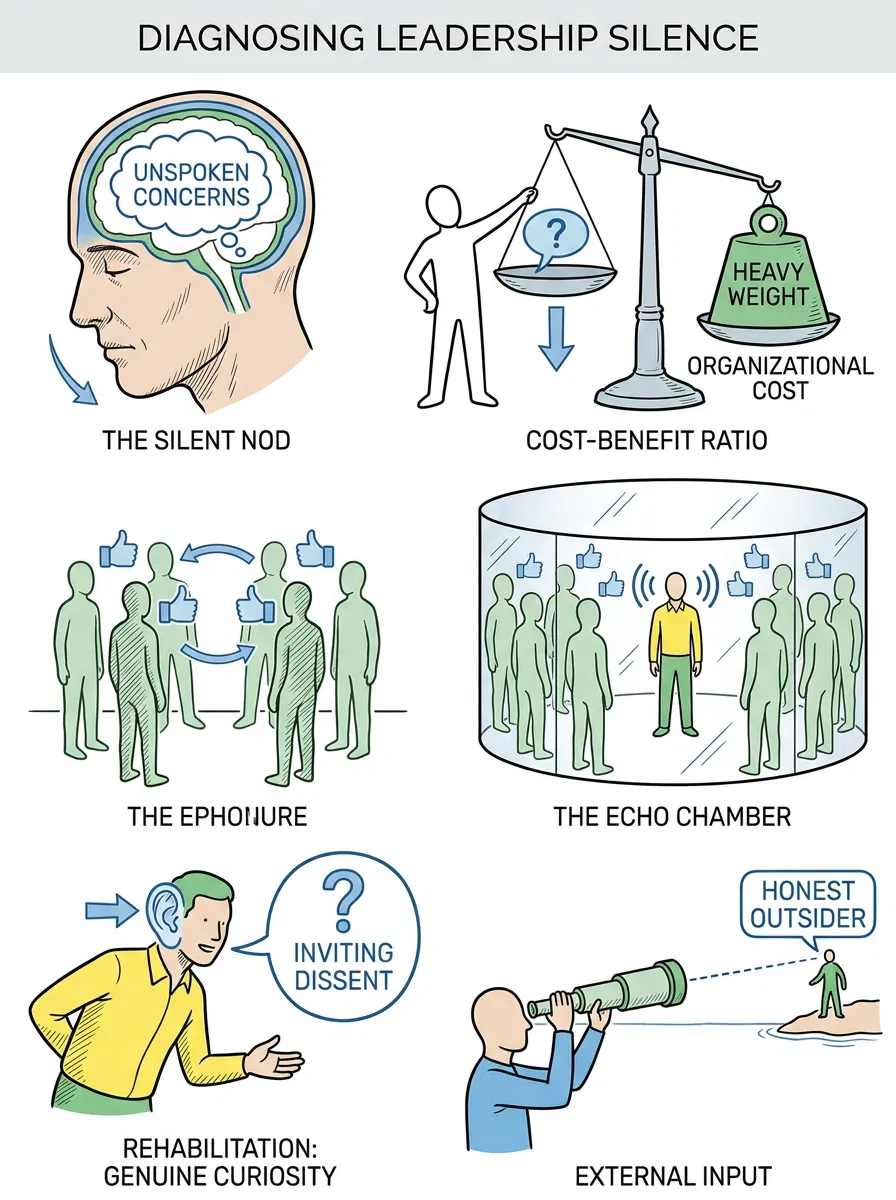
There is a moment I have watched happen in leadership careers across the GCC more times than I can count.
A leader reaches a level of seniority where the pushback stops coming. The meetings run smoothly. The room nods. Decisions get made without friction. And the leader interprets this as a sign that things are working well.
It is one of the most expensive misreadings in leadership.
Because silence in a room is almost never agreement. It is a signal. And what it is signaling is that the cost of speaking up has become too high for the people in that room to bear.
How Teams Learn to Go Quiet
Teams do not decide to stop being honest in a single moment. It happens gradually through a series of small experiences that add up to a clear message.
A leader dismisses a concern too quickly. Someone's challenge is met with defensiveness rather than curiosity. An alternative perspective is heard but clearly not genuinely considered. A person who pushed back in a meeting finds themselves subtly excluded from the next conversation.
None of these moments are necessarily dramatic. But the team notices them. And they draw a rational conclusion. Speaking up here costs more than it returns. So they stop.
And the leader, who is now operating without honest input, believes everything is fine because nobody is saying otherwise.
"Silence in a leadership room is almost never agreement. It is a signal that the cost of speaking up has become too high."
The Decisions That Suffer
The real cost of a silent room is not felt in the meetings themselves. It is felt in the quality of the decisions that come out of them.
Every decision a leader makes in a silent room is made with less information than they believe they have. The concern that would have improved the decision was never raised. The risk that someone on the team could see was never surfaced. The alternative that might have been better was never explored.
And because nobody flagged these things, the leader has no idea they are missing. They feel confident. They feel informed. They move forward with conviction on a decision that was made with half the available intelligence.
Over time this compounds. The gap between what the leader believes is true and what is actually happening in the organisation quietly widens.
Creating the Conditions for Honesty
The leaders who successfully rebuild honest cultures in their teams share one characteristic. They stop waiting for honesty to arrive and start creating the conditions that make it possible.
That means responding visibly differently when someone challenges their thinking. It means asking questions that genuinely invite a different perspective rather than questions that confirm the one they already hold. It means being seen to change their mind when the argument warrants it.
But it also means something more fundamental. It means finding spaces outside their organisation where they can receive the honest input their team can no longer provide. Where someone who has nothing to lose by being direct will ask the question nobody inside the organisation will ask.
Because the leader who cannot access honesty inside their organisation needs to find it somewhere. And the cost of not finding it is carried by everyone they lead.
Join the conversation
Be the first to share your thoughts on this article.