By Samir Geepee · 5 min read
The Feedback Nobody Gives You Anymore
The most dangerous feedback is not the feedback that stings. It is the feedback that stopped coming.
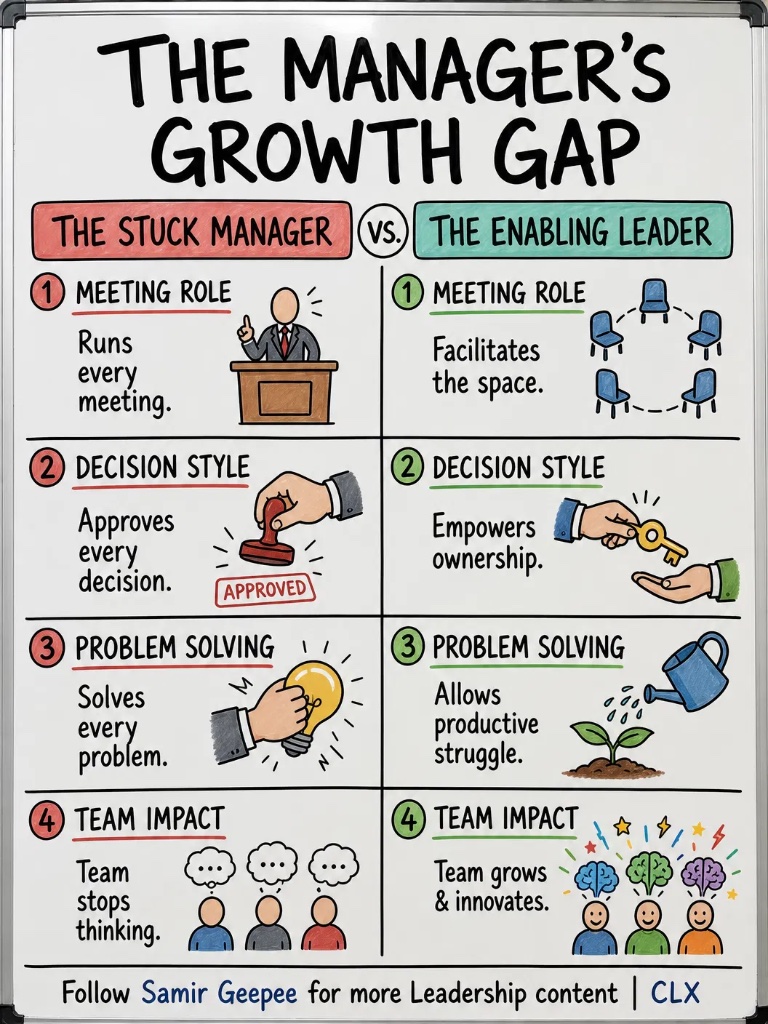
I was sitting with a senior leader recently when she mentioned something almost in passing. Her performance review had gone well. Good feedback. Reliable, delivers, strong relationships.
And then almost as an afterthought her manager had added one more thing. People have stopped disagreeing with you in meetings.
She smiled. Nodded. Drove home feeling fine.
When she brought it up with me three days later I stopped her and asked one question. Do you know what he was actually telling you?
She waited. And I said your team has decided that disagreeing with you costs too much. So they stopped. Which means you are now making decisions with half the information, thinking you have the full picture, because nobody is showing you where the gaps are.
She went very quiet. Then she said something I have not forgotten. So when I thought the room was aligned it was just silent.
Yes. Exactly that.
Why Honest Feedback Disappears
In my experience working with leaders across the GCC, the disappearance of honest feedback is one of the most common and most dangerous things that happens as a leader grows in seniority.
It does not happen because the team stops caring. It happens because over time the team makes a calculation. They weigh the cost of speaking up against the benefit of being heard. And when the cost feels too high, the feedback stops coming.
The cost might be a leader who visibly shuts down challenge. Or one who asks for honesty but rewards agreement. Or simply one who moves so fast and projects so much certainty that there never seems to be a natural opening for a different perspective.
None of this is intentional. But the effect is the same. The feedback loop closes. And the leader keeps operating on incomplete information while believing they have the full picture.
"The most dangerous feedback is not the feedback that stings. It is the feedback that stopped coming because your team decided it was not worth giving."
The Cost of the Silent Room
When a room goes quiet it looks like alignment from the inside. The meetings run smoothly. Nobody pushes back. Decisions get made without friction. A leader can easily mistake this for a well-functioning team.
But what is actually happening is that the team has outsourced their honesty. They are managing upward rather than contributing genuinely. And the leader is operating in an echo chamber that feels like consensus.
Over time this has real consequences. Decisions get made without the friction that would have improved them. Problems that someone on the team could see coming never get surfaced until they arrive. And the leader gradually loses touch with the reality their team is living every day.
The senior manager I mentioned earlier lost one of her best people to a resignation that felt like it came out of nowhere. When we walked back through the previous six months the signals had been there for a long time. She had seen them. But she had nobody to help her decode what she was seeing. Nobody to ask the question she was not asking herself.
How to Rebuild the Feedback Loop
The leaders I work with who successfully rebuild honest feedback cultures do not start by demanding honesty. They start by making honesty visibly safe.
That means responding differently when someone does push back. It means asking questions that genuinely invite challenge rather than questions that invite confirmation. It means being seen to change your mind when someone makes a strong argument. And it means creating the conditions - in one-on-ones, in team meetings, in how you show up generally - where a different perspective is not just tolerated but actively valued.
It also means finding the room outside your organisation where you can think out loud about your own blind spots. Because the honest mirrors that your team can no longer provide need to come from somewhere.
The feedback you are not getting inside your organisation is the feedback you need most. The question is where you are going to find it.

Join the conversation
Be the first to share your thoughts on this article.